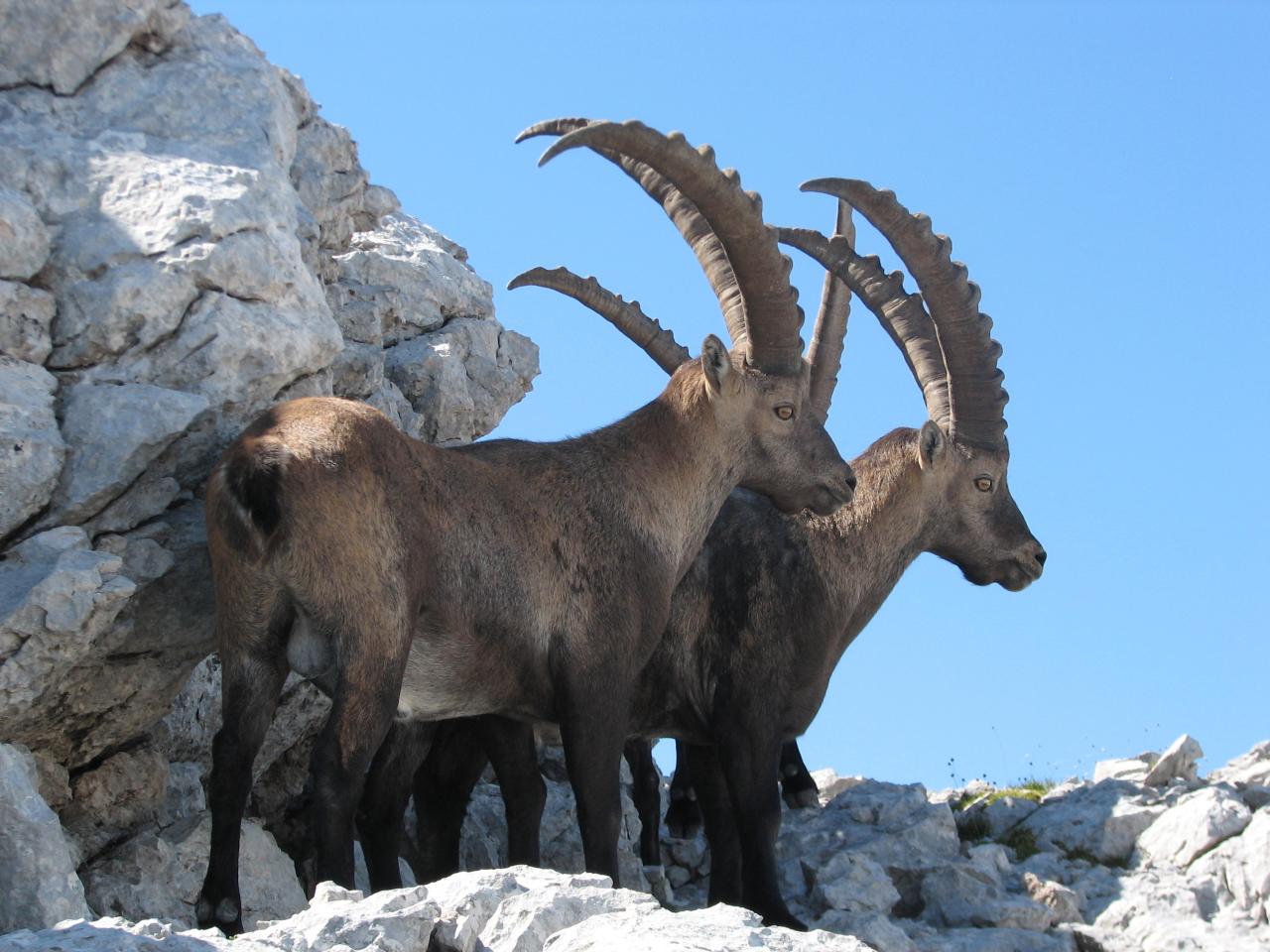
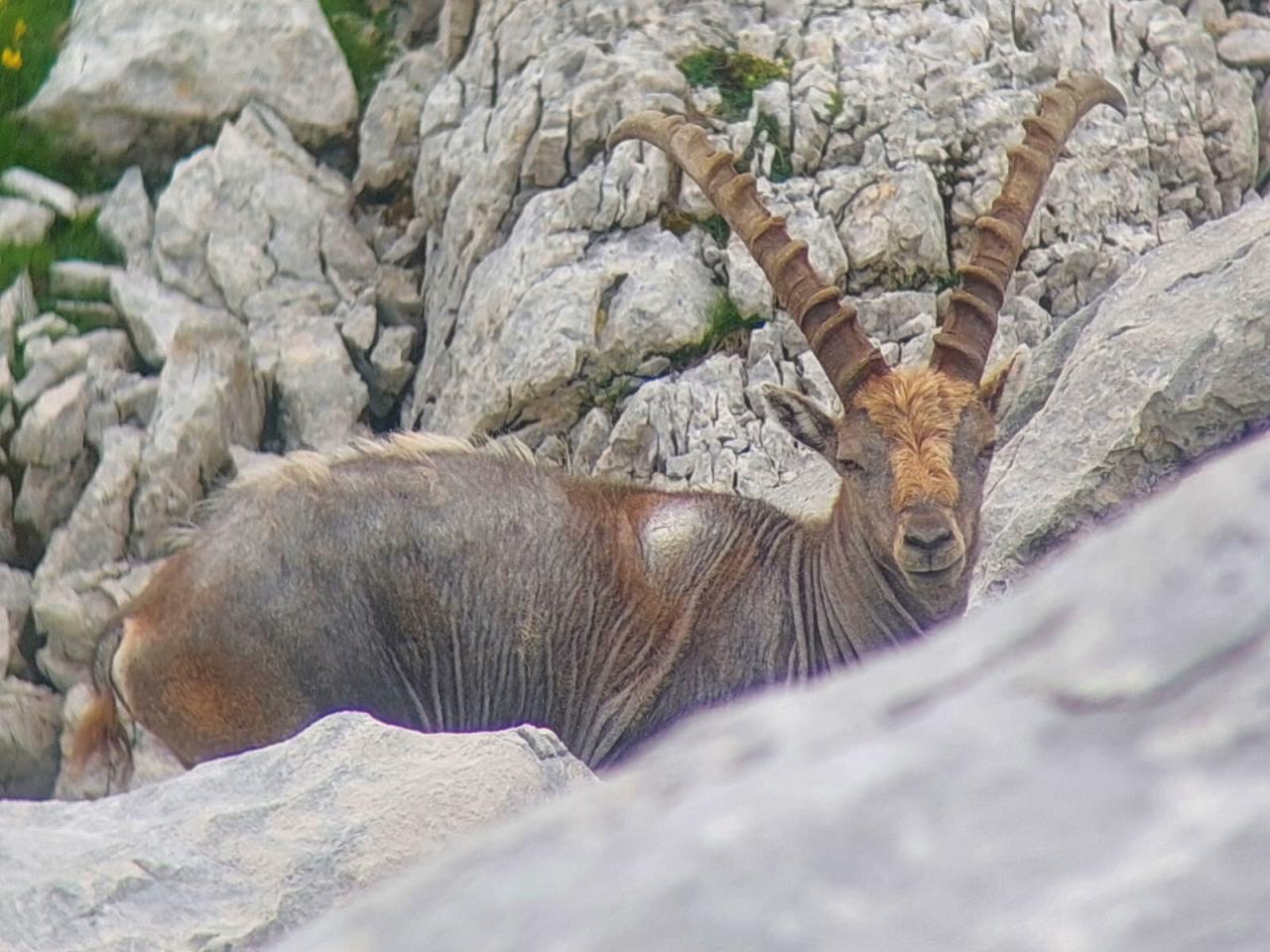
Alpine Ibex
Alpine ibex (Capra ibex) is one of the most recognisable species of Slovenia’s mountain fauna and a symbol of intact alpine nature. Although it is today perceived as an integral part of the Alpine landscape, its presence in Slovenia is the result of a complex history of extinction, reintroduction, and long-standing scientific debate. Recent research has conclusively confirmed that the Alpine ibex is a indigenous species in Slovenia, which represents a key foundation for its long-term conservation.
Native Status of the Alpine Ibex – Scientifically Confirmed
For a long time, it was unclear whether the Alpine ibex had historically been present in Slovenia or whether it should be regarded solely as a reintroduced species. This uncertainty significantly limited management and conservation measures, as legislation distinguishes between native and non-native species.
A decisive breakthrough was achieved through archaeological and genetic research. At several sites in Slovenia, bone remains were discovered that, based on morphological characteristics, can be attributed to the Alpine ibex. Additional confirmation originates from the Tonovcov grad site above Kobarid, where genetic analyses were carried out on well-preserved bone samples. The results confirmed that the Alpine ibex inhabited the area of present-day Slovenia at least until Late Antiquity and the Early Middle Ages.
These findings clearly demonstrate that the Alpine ibex is an indigenous species of Slovenia’s mountain areas. This recognition provides the scientific basis for the professionally justified implementation of active conservation measures.
Distribution and Habitat in Slovenia
Habitat suitability studies have shown that the Slovenian Alps represent a sufficiently extensive and high-quality habitat to ensure the long-term conservation of the Alpine ibex population. The Julian Alps constitute the most important area and represent one of the largest contiguous Alpine ibex habitats in the south-eastern Alps. Suitable habitats are also present in the Karavanke area and the Kamnik–Savinja Alps.
In addition to habitat size, the connections between them are of key importance. Connectivity enables gene flow between individual colonies, thereby maintaining genetic diversity, higher vitality, and resilience of the animals, which are essential for their long-term survival of the species. In contrast, small and isolated colonies are prone to decline. Adequate connectivity can be achieved by appropriately increasing the number of animals within colonies.
Low Genetic Diversity
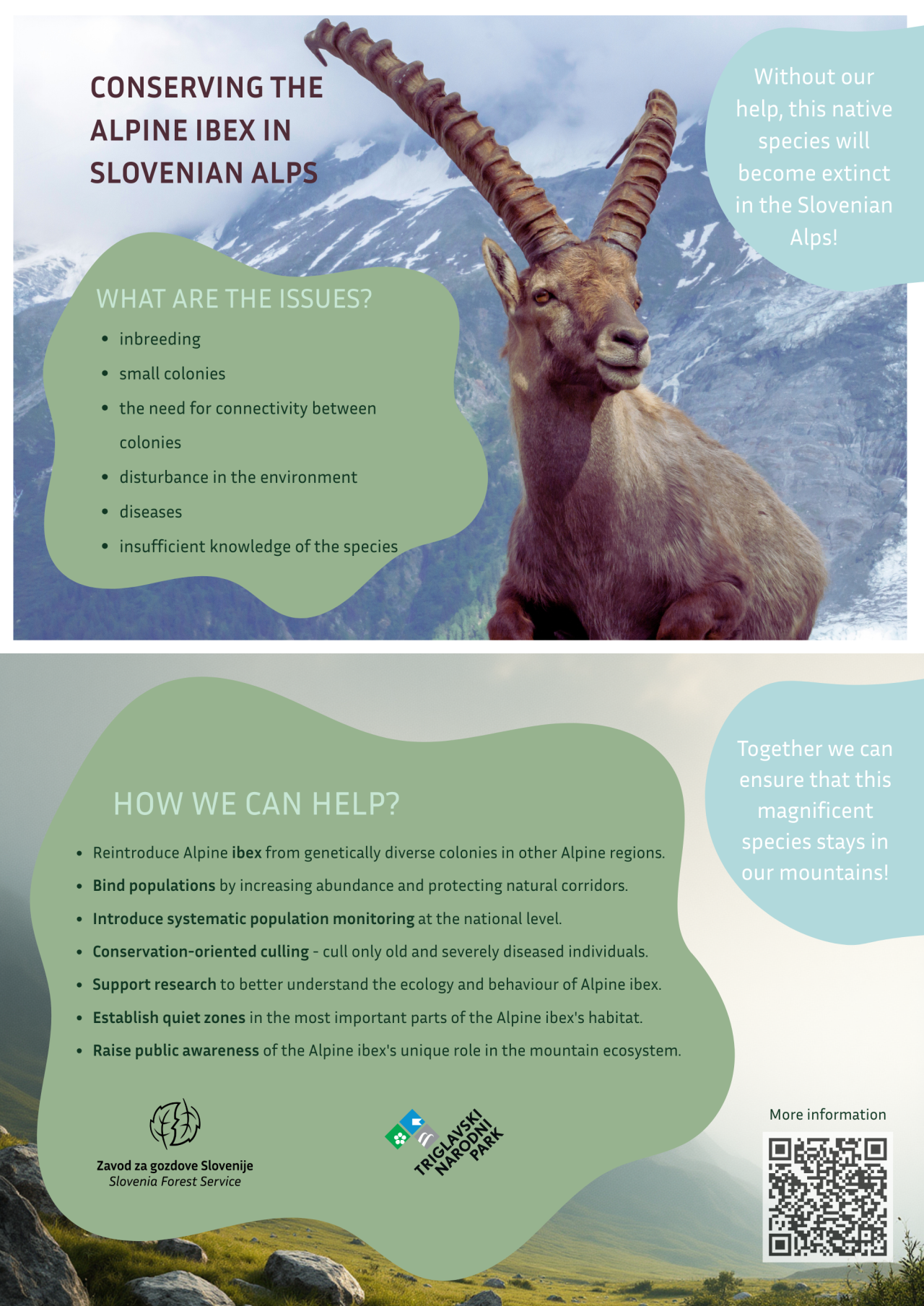
The Alpine ibex colonies in Slovenia originate from a small number of individuals reintroduced during the 20th century. Consequently, inbreeding has occurred, resulting in markedly low genetic diversity, which is further reduced by the isolation of individual colonies.
Inbreeding increases the risk of:
- increased susceptibility to diseases
- reduced vitality
- decreased fertility
- lower numbers of offspring
An effective measure to improve this situation is the professionally guided introduction of genetically unrelated individuals from healthy populations abroad. Such measures have been successfully implemented in other Alpine countries, particularly Switzerland and Italy, where they have significantly improved the genetic status and resilience of Alpine ibex populations.
Additional Measures for the Long-Term Conservation of the Alpine Ibex in Slovenia
The basis of conservation management is systematic monitoring, which includes regular assessments of colony size, spatial distribution, and population trends. This ensures a reliable foundation for timely and effective management decisions, with the clear objective of increasing the population size of the species.
An important component of conservation is monitoring the genetic and health status of colonies. Regular genetic sampling allows the assessment of inbreeding levels, maintenance of genetic diversity, early detection of potential hybridisation with domestic goats, and insight into population vitality. The use of GPS telemetry additionally provides precise data on movement patterns, survival, success of translocations, habitat use, and the impacts of human activities and environmental change.
Long-term population stability also depends on the protection and strengthening of ecological corridors that enable natural migration and connectivity between colonies, the establishment of quiet zones during sensitive periods (e.g. winter and the birthing season), and continuous health monitoring of the population.
The successful implementation of all measures also requires public awareness and involvement, as well as cross-border cooperation aimed at harmonising management across the wider Alpine region. Only in this way will the Alpine ibex remain a permanent component of the Alpine ecosystem and a symbol of a responsible relationship with the mountain environment.
Measures for the conservation management of the Alpine ibex are defined in the Expert Guidelines, prepared by the Slovenian Forest Service in 2025. These guidelines are based on an integrated, coordinated, and scientifically supported approach to species management. (link)
The text is based on the findings of the scientific article On the Native Status of the Alpine Ibex in Slovenia (Neve Repe et al., 2023) and the Expert Guidelines for the Conservation Management of the Alpine Ibex (Capra ibex) in Slovenia, prepared by the Slovenian Forest Service.